Foto: Willemarcel, CC BY-SA 3.0, via Wikimedia Commons
Plenty of people call the Vale do Pati the most beautiful trek in Brazil — and that is not just an agency's opinion: it is the consensus among the country's hikers. It is a valley set deep in the heart of the Chapada Diamantina National Park, ringed by rock walls hundreds of metres high, where families of residents still live and host walkers in their own homes.
This is not a day tour. It is a crossing, with overnight stays, a pack on your back and long days of walking. This guide gathers everything you need to decide before booking.
How many days it takes
That depends on the route you choose. The most common options are 3, 4 or 5 days, varying according to the entry and exit points — Vale do Capão, Guiné or Andaraí.
The 3-day version usually enters and leaves by the same point. The 4- and 5-day versions are true crossings, entering and exiting at different points, and they let you include more sights without repeating any stretch.
The choice comes down to your fitness, the time you have available and the weather conditions in the week of your trip.
How hard it really is
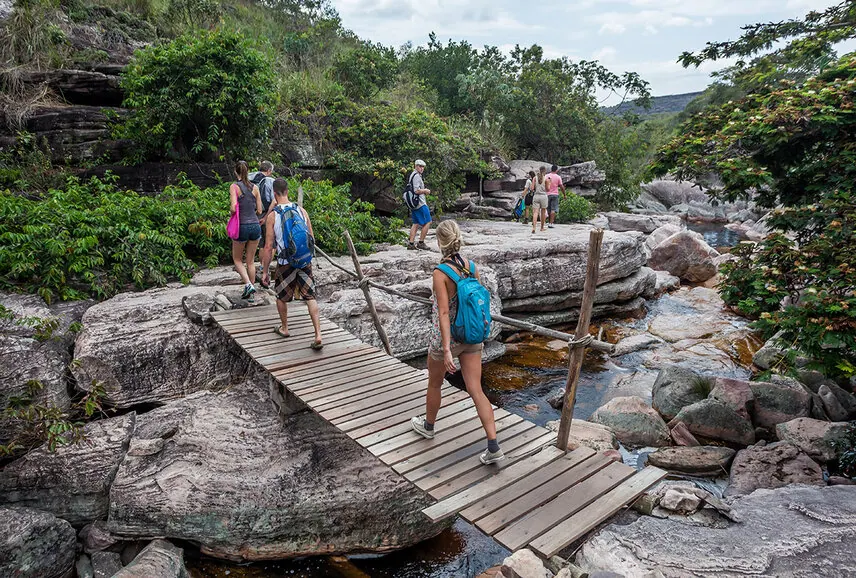
Moderate to difficult — and that label is worth taking seriously. The days are long, with climbs and descents, some of them very steep, over uneven terrain of loose rock and roots.
The average is around 5 hours of walking a day, carrying a pack. It is not the distance that tires you out, it is the cumulative elevation change combined with the weight and the heat.
The good news is that no technical skill is required: there is no climbing and no special equipment. What it does require is reasonable fitness, stamina and — guides are insistent about this — the mental readiness for consecutive days of effort.
People of all ages complete the crossing. What separates those who finish strong from those who suffer is rarely age, but rather preparation and realistic expectations.
Where you sleep
Here is what makes the Pati different from any other Brazilian trek: you sleep in the homes of the valley's residents.
These are families who have lived there for generations, descendants of diamond prospectors, and who today welcome walkers with a bed, a shower and home cooking. Dinner is served at the family table, and the conversation often carries on well afterwards.
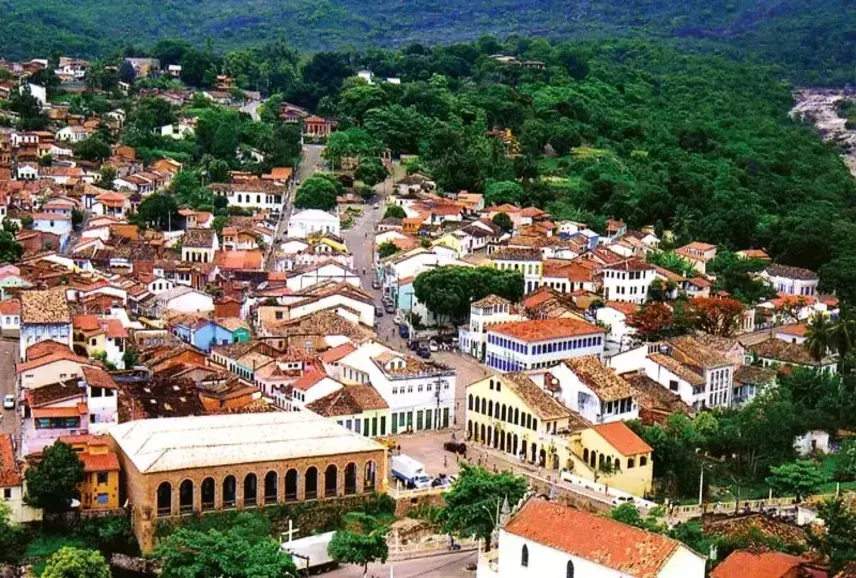
That changes the nature of the experience: beyond the landscape, you get to know a way of life that has existed with no road access for more than a century. And the money from tourism goes straight to the people who live in the valley.
There is also the option of camping, but staying in the houses is what most people choose — and what sustains the community.
Best time for the crossing
The recommended window runs from May to November, in the dry season. The trails are firm, river crossings are predictable and the risk of the unexpected is far lower.
In the rainy season the crossing is still possible, and the valley puts on a different kind of show: the Cachoeirão can plunge in dozens of simultaneous falls, a scene nobody who has seen it ever forgets. The trade-off is slippery trails, swollen rivers and a greater chance of route changes.
If this is your first long crossing, go in the dry season.
What you see along the way
The Cachoeirão, with its multiple falls tumbling from an amphitheatre of rock. Morro do Castelo, with a cave you walk right through. Viewpoints that open up after hours of climbing, revealing the whole valley below.
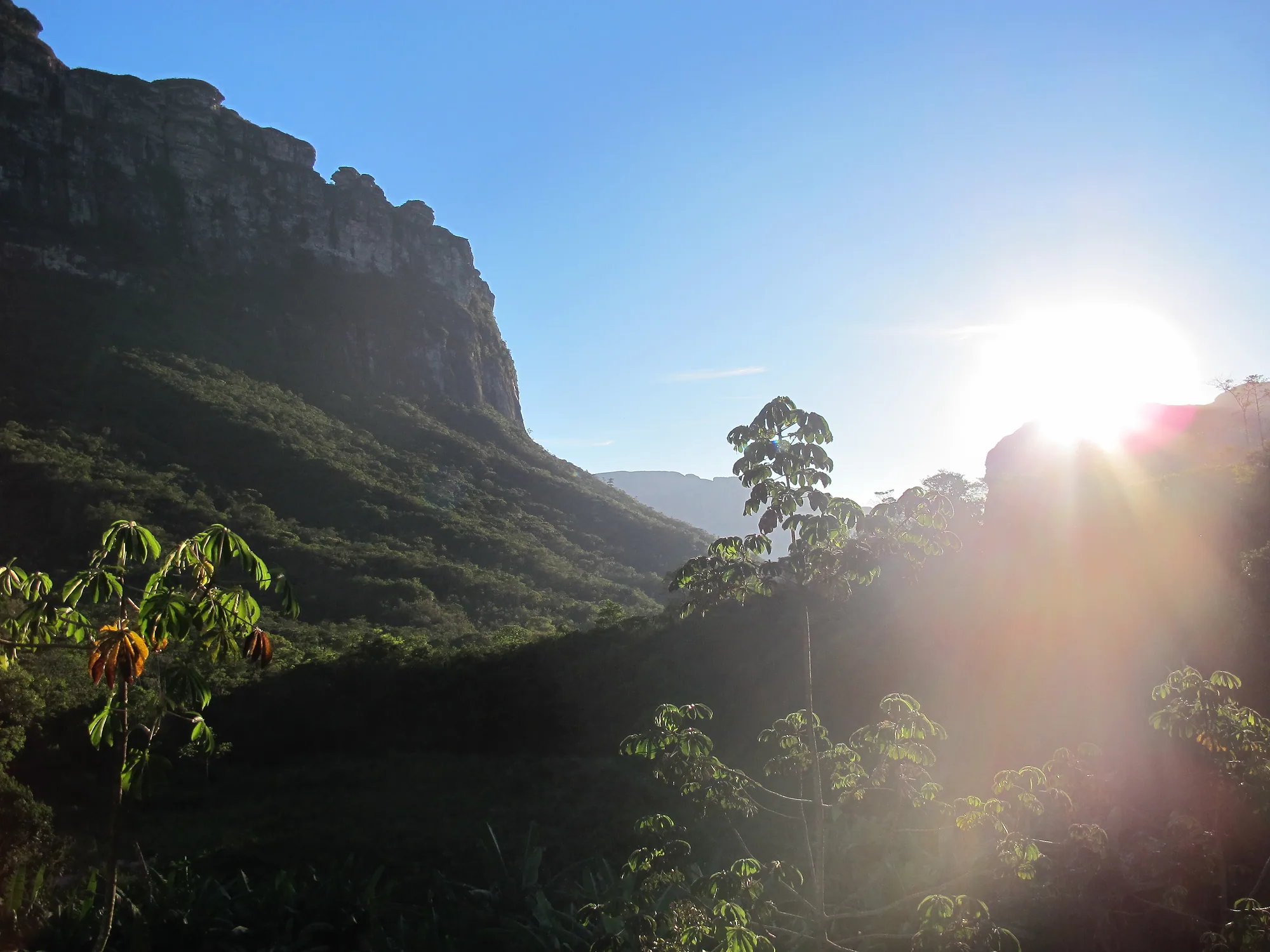
And the sunrise — which for many people is the most memorable moment of the whole crossing. The light entering the valley for the first time, with mist still lying in the bottom, is the kind of image that justifies every day of walking.
What to bring
A 40- to 50-litre backpack, properly fitted to your body. Trail shoes or boots that are already broken in — christening new footwear on a crossing is a recipe for blisters on day one.
Light quick-drying clothing, one dry set to sleep in, a rain jacket, a head torch, sunscreen, insect repellent, a personal first-aid kit and a bottle holding at least 2 litres.
Trekking poles make a real difference on the long descents, especially if your knees are sensitive.
Pack the bare minimum: every extra kilo is carried for hours, day after day.
Why you should go with a guide
In the Vale do Pati a guide is not a convenience: the trails branch off, they are unmarked and they cross areas with no mobile signal. Taking a wrong turn in the middle of the valley is a serious problem.
The guide also arranges the accommodation with the families, adjusts the group's pace and knows how to read the day's conditions — when a river is safe to cross and when it is not.
Who it is for (and who it is not for)
It is for travellers who want the full Chapada experience and are prepared for consecutive days of walking. It is for people who value both the landscape and the contact with the valley's community.
It is not for anyone who wants comfort, a guaranteed hot shower and mobile signal. Nor is it the ideal first taste of the Chapada: if you only have a few days, you will get far more out of a classic itinerary taking in the landmark sights.
If this is your first time in the region, consider doing the classic tours now and coming back for the Pati on a second trip, when you already know the terrain.
Chapada Mar arranges all of this for you: transport on every tour, an accredited local guide, park tickets and fees. Tell us how many days you have and how many people are travelling, and we will build the itinerary and send you a fixed quote — with 10% off for upfront payment by PIX, cash or single-instalment card.